
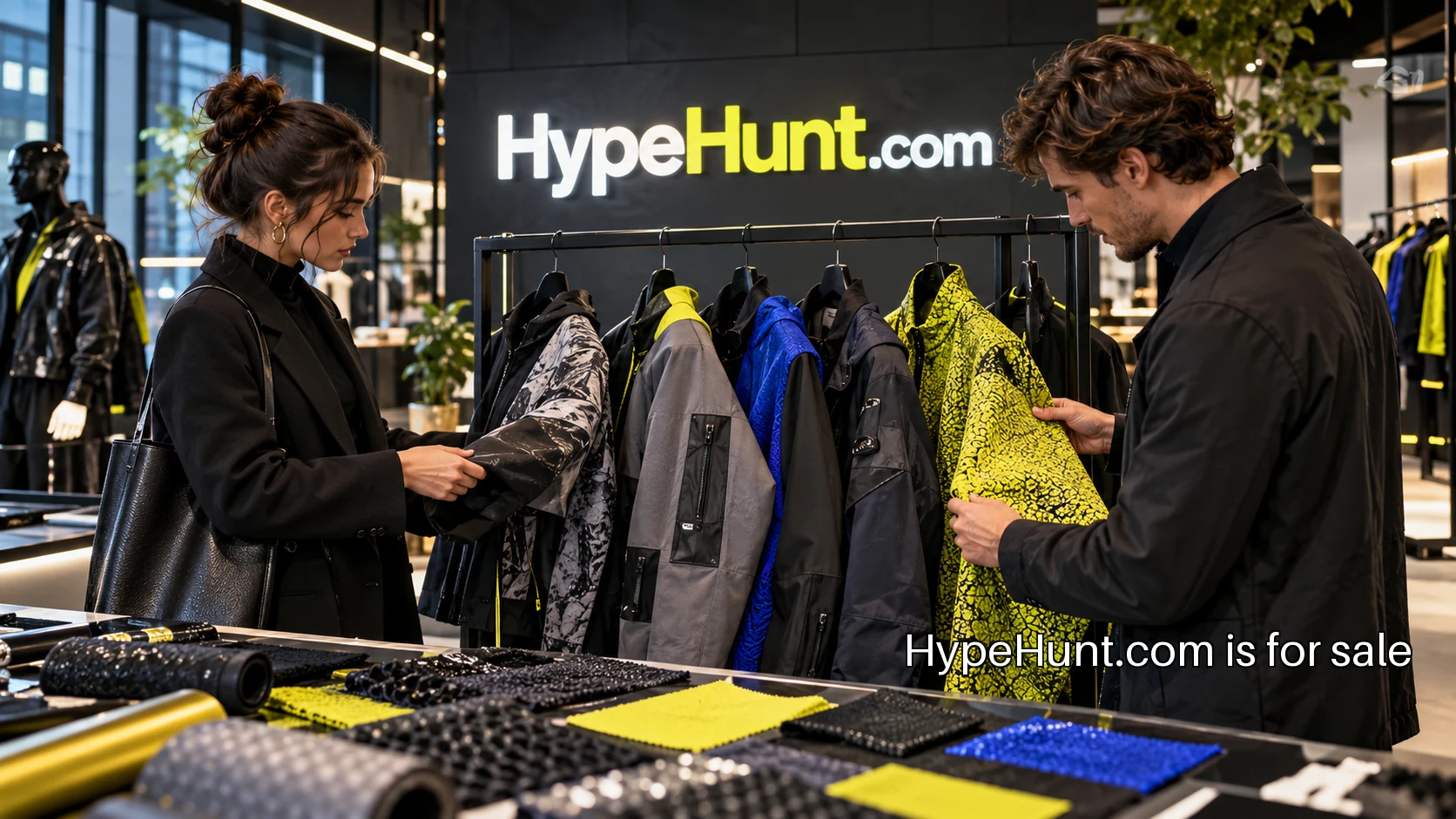
Independent retailers make choices before a product reaches their own shelves. A specialist culture radar could help a buyer examine the signals around one category: emerging materials, small collaborations, new retail formats and changes in how objects are presented. HypeHunt.com offers an energetic editorial name for a founder who wants to turn that research into a focused publication. This is an illustrative business concept for a future owner.
Give one buyer a clear research question
Choose a narrow retail niche for the first brief. Consider independent homeware shops interested in objects for compact living. The research question could be how small makers are approaching storage that stays visible in a room. That scope is specific enough to guide a week's collection and broad enough to reveal contrasting approaches. A report can show modular wall pieces, stackable containers and furniture with exposed compartments without pretending they are all one trend.
The first customer conversation should test the decision the brief would support. A buyer might want candidate makers for a coming assortment review, visual references for a display or questions to ask at a trade appointment. Those are different deliverables. Select one and write it at the front of the pilot. The founder can then decide which observations belong and which would merely make the report longer.
Keep an observation log
Every signal begins as an observation with a source. A useful log records the maker, the object or presentation, the original URL, the date observed and the exact feature worth investigating. Keep the observation separate from the interpretation. A photograph showing open storage supports a note about its visible design. It does not establish demand, production capacity or a wider change in consumer behavior.
Add a field for the next question. The researcher might need to ask whether the piece is in production, which materials are available or whether the maker works with independent shops. That field turns an attractive reference into a small research task. Once the answer arrives, the log contains both the initial observation and the follow-up, so the brief can cite the right level of evidence.
Collect across different kinds of original sources. A maker's product page can establish dimensions and materials. An interview can explain a design decision. A shop's own display photographs can show how an object was presented. Keep each source attached to the statement it actually supports. Several pages repeating one announcement count as one originating observation in the research file.
Assemble a brief a buyer can use
The first report could have six signals grouped around a single buying question. Give each signal one page or a clearly bounded section: the observation, a photograph used with appropriate permission, its source, the interpretation and a question for the next assortment meeting. End with a comparison across the six. The comparison is where the researcher's judgment becomes visible, because the buyer can examine similarities and differences in one place.
For a compact-living brief, one signal might concern stackable ceramic containers. The observation describes the visible stacking system and the maker's published specifications. The interpretation could discuss how a shop might display several pieces within a small footprint. The next question could ask about case quantities or display samples. A second signal about a wall-mounted organizer should earn its place through a different design choice, giving the buyer a broader set of approaches to discuss.
The report should also preserve questions that remain open. Label a production detail as awaiting confirmation when the original source has not supplied it. Put sourcing contacts in an appendix if sharing them is appropriate, and distinguish a retailer's possible next step from an arrangement already made. The customer then receives an organized research artifact with a clear path to further investigation.
Sell a bounded pilot
A first commercial offering can be a four-week research pilot for a small group of independent retailers. Define the category, delivery dates, report format and number of feedback conversations before taking payment. The scope might include one sample brief, two full reports and a closing discussion about which signals were useful in buying meetings. The purpose is to learn whether this research format serves a real recurring decision.
Recruit the first participants through relevant retailer associations, independent shop networks and direct introductions. Show a sample signal page with its original sources and interpretation. A buyer should be able to see what the research looks like before deciding to join. Ask what their team already collects and where they lose time comparing it. Those answers can shape a useful pilot rather than an oversized subscription package.
Set a clear boundary around custom requests. A question that improves the common brief can enter the next research cycle. A request for an entirely different category needs a separate scope. This protects the publication's focus and gives the founder a realistic view of the hours required per report. HypeHunt becomes the identity on a consistent body of specialist work, with an editorial remit that a buyer can describe to a colleague.
Build the archive as a record of judgment
After the pilot, organize past signals by category, material and observation date. Preserve source dates so a future reader can distinguish a historical example from a current supplier lead. Revisit a few early signals in later issues and explain what developed. The archive can then show how the publication's reasoning evolves, including questions that led somewhere useful and observations that remained isolated.
The immediate next step is a sample brief for one retail niche, supported by a small source log and an interview with a prospective reader. A founder considering this direction can bring that scope to the HypeHunt.com inquiry. It makes a concrete starting point for discussing the name behind a specialist research publication.